

For much of the past 25 years, measles has been relatively uncommon in the United States, with many clinicians having limited firsthand experience treating the disease. Recent trends, however, have brought measles prevention back into focus. As of October 29, the Centers for Disease Control and Prevention had confirmed 4,852 cases in 2026, the highest annual total in 35 years and more than double the cases reported in all of 2025.
While the increase is significant, the country's history of measles prevention offers valuable perspective. Decades of scientific progress, widespread vaccination, and consistent public health efforts have demonstrated what's possible when communities work together to prevent disease. Understanding today's trends alongside past successes can help healthcare practices continue building on that progress.
What the Data Shows
The latest data offers a clearer picture of where measles is spreading and which populations are most affected. Ninety-six percent of cases in 2026 have been linked to outbreaks, and the same proportion occurred among people who were unvaccinated or whose vaccination status was unknown. Approximately 11% of reported cases were hospitalized, and CDC has recorded three deaths.
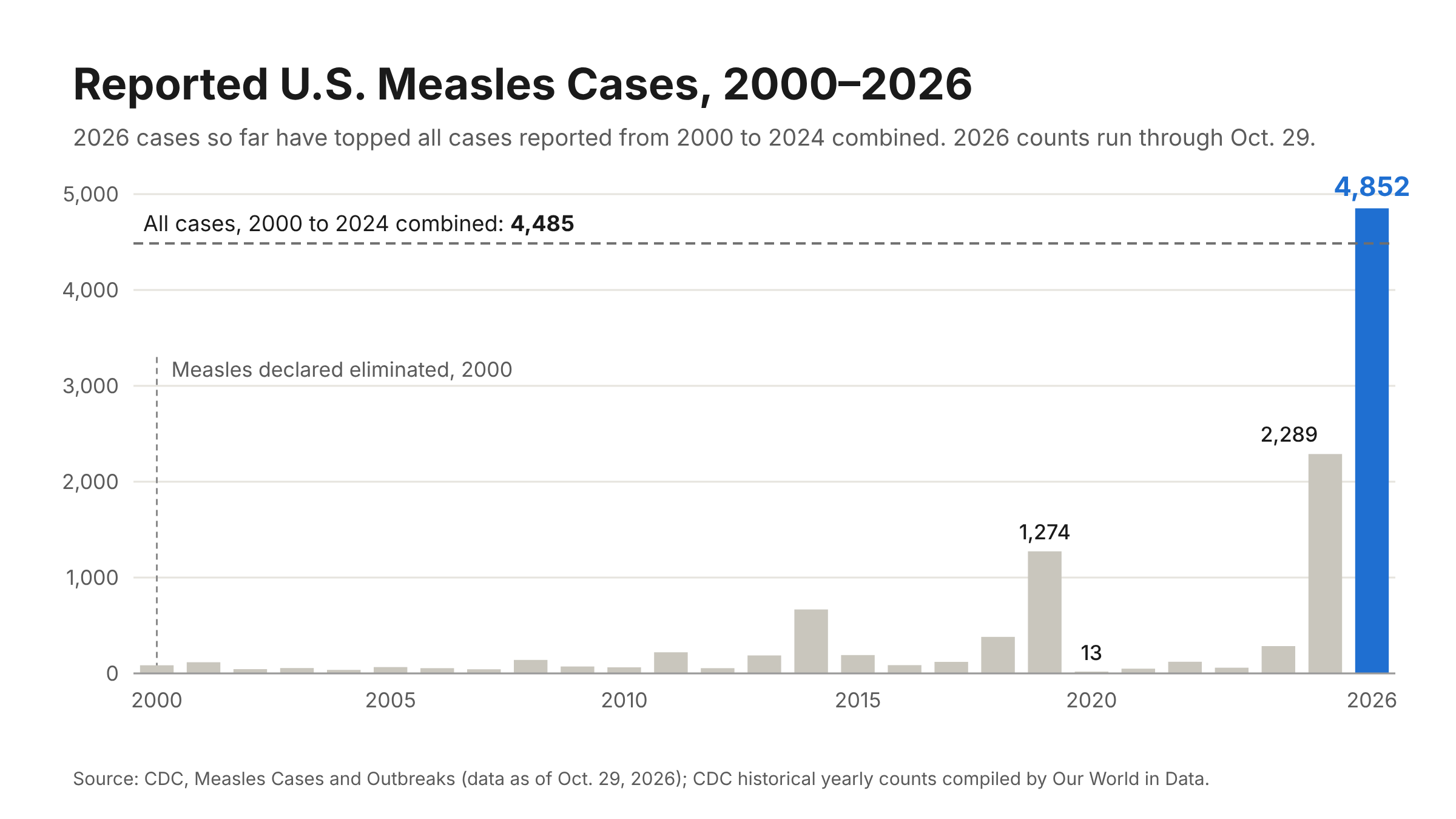
Measles activity has varied considerably across the country. According to CDC's state-level data, Pennsylvania has reported the highest number of cases in 2026, with more than 1,400. Other states with substantial case totals include South Carolina, Utah, and Wisconsin, with additional activity in Kentucky, Ohio, Texas, and New York.
These trends highlight the importance of strong local vaccination coverage and offer an opportunity to revisit the strategies that have successfully reduced measles transmission in the past.
What the Past Can Teach Us
The history of measles prevention is one of remarkable public health progress. Before a vaccine was available, CDC estimates that 3 to 4 million Americans were infected each year, with an estimated 400 to 500 deaths annually among reported cases.
The introduction of the first measles vaccine in 1963 marked a turning point, followed by important advances from vaccine researcher Dr. Maurice Hilleman. He developed an improved measles vaccine introduced in 1968, as well as a mumps vaccine using a virus sample collected from his daughter, Jeryl Lynn, when she became ill. His work helped pave the way for the combined measles, mumps, and rubella (MMR) vaccine, licensed in 1971.
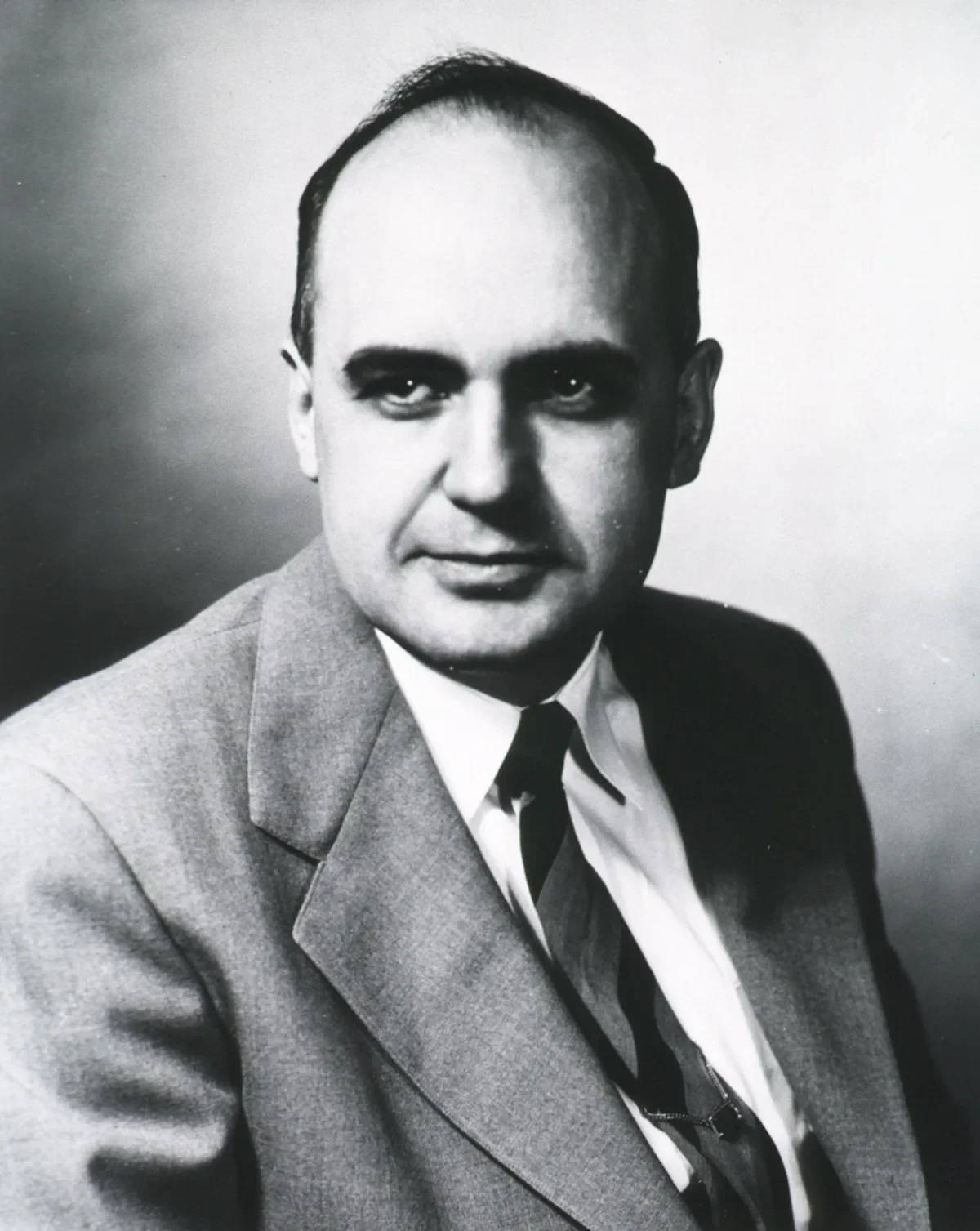
Maurice Hilleman, circa 1958. Photo: Walter Reed Army Medical Center, courtesy of the National Library of Medicine (public domain).
During a measles resurgence from 1989 to 1991, healthcare and public health leaders reinforced the importance of a two-dose MMR schedule. As vaccination coverage improved, cases declined, and in 2000, measles was officially declared eliminated in the United States, meaning continuous transmission within the country had been interrupted.
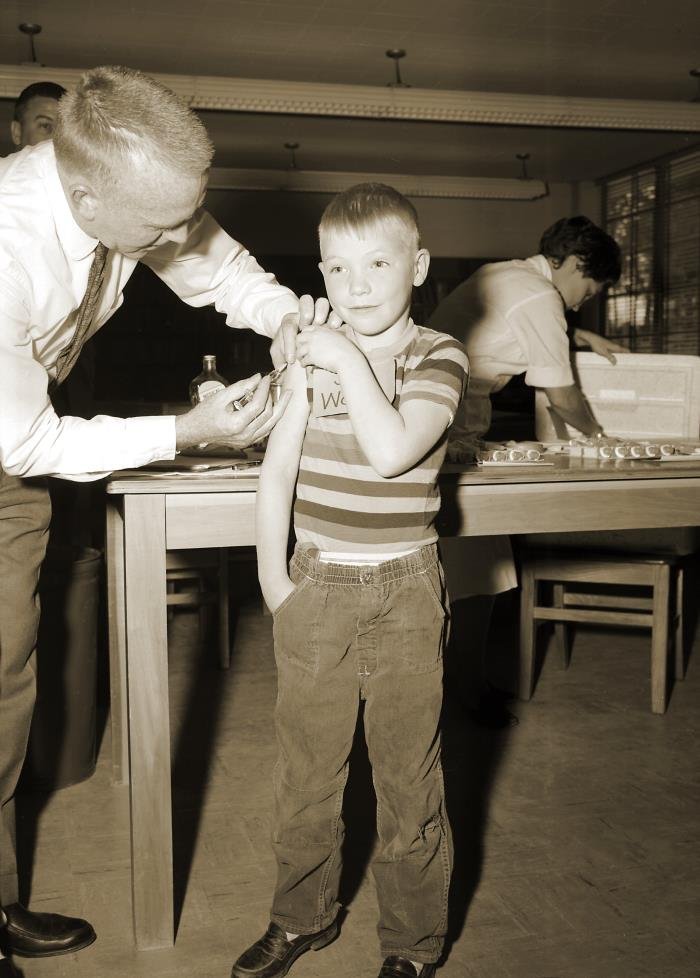
A schoolboy receives a measles vaccination at Fernbank Elementary School in Atlanta, Georgia, 1962. Photo: CDC, via CDC Public Health Image Library (PHIL ID 2433).
That achievement highlights the lasting value of consistent immunization efforts. Today, Today, three vaccines containing measles protection are available in the U.S.: Merck's M-M-R II and GSK's PRIORIX, which protect against measles, mumps, and rubella, and Merck's ProQuad, which also protects against varicella (chickenpox) and is approved for children ages 12 months through 12 years. However, vaccine availability alone does not guarantee widespread protection.
Vaccine hesitancy remains an important challenge, alongside barriers to access and missed immunizations. In recent years, the spread of misinformation through social media, declining trust in public health institutions following the COVID-19 pandemic, and conflicting messages about vaccine safety have added to longstanding concerns. Against this backdrop, national kindergarten MMR coverage has declined from 95.2% in the 2019–20 school year to 92.4% in 2025–26, below the approximately 95% coverage level that helps prevent outbreaks.
Closing these gaps requires a combination of accessible vaccination services, trusted patient education, and consistent preventive care. Healthcare practices are well-positioned to support these efforts through routine immunization reviews, accurate recordkeeping, and informed conversations that help patients feel confident in their vaccination decisions.
How Practices Can Help Today
The progress made against measles over the past several decades reflects the power of effective vaccines, informed patients, and dedicated healthcare providers. Today, practices can build on that success through three key strategies that support individual and community protection.
Keep immunization records current
Preventive visits, annual checkups, and new-patient appointments offer opportunities to confirm measles immunity and identify patients who may need vaccination. Practices can make these reviews more consistent by incorporating record checks into pre-visit planning, using electronic health record reminders, and consulting state immunization registries when documentation is incomplete. CDC outlines several forms of acceptable evidence of immunity, including written vaccination records, laboratory evidence, and birth before 1957, with additional considerations for healthcare personnel.
Follow official public health guidance
As measles activity evolves, practices should regularly consult CDC and state or local health department recommendations to ensure their vaccination protocols and patient guidance remain up to date. Current CDC guidance for children recommends two routine MMR doses at 12 to 15 months and 4 to 6 years, with additional considerations for international travelers and certain outbreak situations. Adult recommendations vary by birth year, immunity status, and risk factors. While adults born before 1957 are generally presumed immune, those born in 1957 or later may need one or two doses depending on their circumstances, including healthcare employment, international travel, and college enrollment. Practices can reference the CDC's adult MMR vaccination guide for specific recommendations. Teams should also stay familiar with protocols for suspected cases, including prompt isolation, airborne precautions, and coordination with public health authorities.
Prepare for patient questions.
Practices can support patient education by ensuring clinical teams are prepared to address common questions about measles risk, vaccine safety, and effectiveness. For example, clinicians can explain that measles is highly contagious, with up to 9 in 10 unprotected close contacts becoming infected following exposure, and emphasize the strong protection offered by vaccination: two doses of MMR are approximately 97% effective at preventing measles.
Protecting Patients and Communities
Although today's landscape presents renewed challenges, the same principles that supported measles elimination continue to offer a path forward. By maintaining strong immunization practices, staying informed about evolving guidance, and helping patients understand the value of vaccination, healthcare providers can make a meaningful contribution to protecting their communities.
Atlantic Health Partners works directly with all major vaccine manufacturers to help practices secure favorable pricing on routine vaccines, including MMR, and plan inventory as demand shifts. Reach out to learn how we can support your immunization program.